What if the argument you're having with your spouse isn't actually about what you're arguing about?
Maybe it's about money.
Maybe it's about how much time your spouse spends on their phone.
Maybe it's about the dishes, the kids, intimacy, or the fact that your spouse doesn't seem interested in spending time with you anymore.
Whatever the argument is, it probably feels important.
And it is.
But what if the issue you're fighting about isn't actually the problem?
What if it's just a symptom of something much deeper?
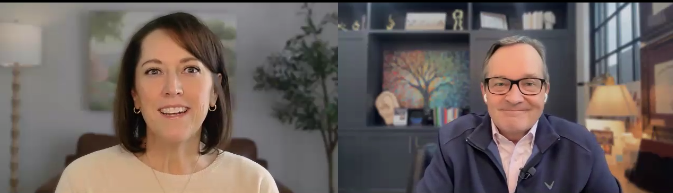
This is one of the most important things I've learned in my work as a Marriage Crisis Coach, and it's something I recently had the privilege of discussing with Dr. Matt Townsend, author of Starved Stuff: Feeding the 7 Basic Needs of Healthy Relationships.
Matt has been one of my teachers and mentors for years. His work has profoundly influenced the way I help individuals and couples understand their relationships.
And during our conversation for this week's FOCUS Podcast, he shared a powerful reminder:
Sometimes we're so busy fighting about what's happening on the surface that we never address what's actually creating the conflict.
The Smoke vs. the Fire
Matt tells a story about a couple who were in the middle of a divorce.
When he asked what had brought them to this point, the husband began talking about a $400 purse his wife had purchased.
He was upset about how much she'd spent.
She quickly reminded him about an expensive golf bag he'd recently purchased.
Before long, they were arguing about the cost of the bag, the cost of the golf equipment, and who had spent more money.
Then the conversation shifted.
Suddenly, it wasn't really about the purchases anymore.
It was about feeling unimportant. Feeling like something else mattered more than the relationship.
Matt describes these surface-level arguments as the smoke.
The smoke is what we can see.
It's what we talk about, complain about, and fight about.
But where there's smoke, there's usually a fire.
And the fire is often connected to something much deeper.
A need that isn't being met.
A fear that hasn't been addressed.
A pattern that keeps repeating itself.
The problem is that many couples spend years trying to manage the smoke without ever getting close enough to understand the fire.
And sometimes that's because the fire feels too painful to approach.
It's easier to fight about the money than admit we're afraid.
It's easier to complain about a spouse's phone than admit we feel unimportant.
It's easier to criticize someone's behavior than admit we're longing for reassurance, affection, or connection.
But as long as we're only fighting the smoke, we may never resolve what's actually hurting the relationship.
The Seven Needs Beneath Your Marriage Conflicts
One of my favorite things Matt teaches is his STARVED framework.
It identifies seven basic needs that matter in healthy relationships.
These are needs we all experience, although we may express them differently.
S — Safety
Do I feel physically, emotionally, financially, and relationally secure with you? Can I be honest about my feelings without fearing ridicule, punishment, or rejection?
T — Trust
Can I depend on your character and your ability to follow through? Do your words and actions give me reasons to trust you?
A — Appreciation
Do I feel valued? Do you notice the things I do, the effort I make, and the ways I contribute to our relationship?
R — Respect
Do you see me as someone who matters? Do you value my opinions, experiences, strengths, and individuality?
V — Validation
Can you recognize that my experience is real to me, even when yours is different?
E — Encouragement
Do I feel like you're in my corner? Do you support my growth, hopes, and goals?
D — Dedication
Do I know that our relationship matters to you? Do your time, attention, and priorities reflect that commitment?
When these needs go unmet, we often don't recognize what's happening.
Instead, we react.
We criticize.
We withdraw.
We become defensive.
We try harder to get our spouse to understand.
Or we stop trying altogether.
And then something important happens.
Our reactions may begin starving the very needs our spouse is also longing to have met.
One person feels unsafe and becomes critical.
The other feels disrespected and withdraws.
That withdrawal creates more fear.
The fear creates more criticism.
And the cycle continues.
Sound familiar?
This is why understanding the underlying needs is so important.
It helps us stop looking at every conflict as an isolated problem and begin recognizing the patterns connecting them.
One of the Hardest Questions You Can Ask Yourself
During our interview, Matt shared a question that I think every married person should consider:
"What is it like to be in a relationship with you?"
Not what is it like to be married to your spouse.
Not whether your spouse is meeting your needs.
Not whether your spouse appreciates everything you do.
What is it like to be in a relationship with you?
Does your spouse experience you as someone who listens?
Someone who respects their perspective?
Someone who notices their efforts?
Someone who can hear something difficult without immediately becoming defensive?
This can be an uncomfortable question.
Especially when you're hurting.
Because when you're in a marriage crisis, you're often very aware of everything your spouse is doing that causes you pain.
You know what they've said.
You know how they've pulled away.
You know how lonely you've felt.
And those things matter.
But if you're only looking at your spouse's behavior, you may be overlooking the part of the relationship where you still have some influence.
Your own behavior.
Your own reactions.
Your own willingness to recognize and change patterns.
That doesn't mean taking responsibility for your spouse's choices.
And it certainly doesn't mean excusing betrayal, dishonesty, cruelty, or other harmful behavior.
It means being willing to look honestly at what you contribute to the relationship without accepting responsibility for what belongs to someone else.
That distinction matters.
But What If You're the Only One Willing to Work on Your Marriage?
This is probably one of the most common situations I encounter in my coaching practice.
One spouse has become uncertain.
They've emotionally withdrawn.
They say they don't know what they want anymore.
And the other spouse is desperately trying to figure out how to stop the marriage from falling apart.
They want to talk about it.
They want answers.
They want reassurance.
They want to fix whatever has gone wrong.
And when their spouse doesn't respond the way they hope, they become even more anxious.
So they pursue harder.
Which often causes their spouse to pull further away.
This is one of the reasons I was so interested in Matt's perspective.
Because during our conversation, he emphasized something I deeply believe:
One person can begin changing a relationship pattern.
That doesn't mean one person can guarantee the marriage will survive.
Eventually, both people have to make their own choices about participating in the relationship.
But one person can begin changing the way they show up.
One person can stop feeding an unhealthy cycle.
One person can start responding differently.
One person can become more aware of their own emotional reactions, needs, and behaviors.
And sometimes those changes create room for something new to happen.
But there's an important distinction here.
You don't make those changes as a strategy to control your spouse.
You make them because they're aligned with who you want to become.
Whether your spouse changes or not.
The Battle Happening Inside Your Own Mind
Another part of our conversation moved into one of my favorite teachings from Matt: Body–Mind–Spirit.
At its heart, this framework is about recognizing that our physical reactions, the stories our minds create, and our deeper sense of identity and values are not all the same thing.
Think about what happens when your spouse says:
"I don't know if I want to be married anymore."
Your body reacts.
Your heart races.
Your stomach drops.
Your breathing changes.
You might feel shaky, nauseated, or overwhelmed.
Then your mind gets involved.
This is the end.
I'm going to lose everything.
I'll never be happy again.
What if they find someone else?
How can I make them understand?
Before long, you're not just experiencing an incredibly painful moment.
You're also living inside a story about everything that moment might mean.
And sometimes that story becomes even more frightening than the facts you actually know.
One of the most powerful skills we can develop is the ability to notice what our mind is doing rather than automatically believing and acting on every thought it produces.
You can notice fear without letting fear make every decision.
You can feel grief without treating the feeling as proof that your future is hopeless.
You can experience uncertainty without immediately trying to eliminate it through another conversation with your spouse.
This doesn't make the pain disappear.
But it can help you stop adding unnecessary suffering through the stories you're telling yourself.
"Who Do I Want to Be Through This?"
During the interview, I shared a deeply personal experience.
A little over two years ago, my daughter was diagnosed with cancer.
It was terrifying.
And while we were in the hospital preparing for her treatment, Hurricane Helene hit.
The hospital was dealing with serious disruptions. We were frightened, exhausted, and surrounded by circumstances we couldn't control.
At one point, after a particularly overwhelming interaction, I found myself reacting out of fear and frustration.
And then I stopped.
My daughter and I looked at each other, and we asked a question that changed how we approached the experience.
"Who do we want to be through this?"
We couldn't control the diagnosis.
We couldn't control the hurricane.
We couldn't control the disruptions happening around us.
But we could make intentional choices about how we wanted to respond.
We could decide what mattered most to us.
We could decide how we wanted to treat other people.
We could decide what kind of people we wanted to be through an experience we never would have chosen.
And that question has stayed with me.
Because it applies to marriage crises, too.
You might not be able to control whether your spouse chooses to stay.
You might not be able to control how quickly things change.
You might not be able to control what your spouse thinks, feels, or decides.
But you can begin deciding who you want to be through this experience.
Not who you need to become to convince them to stay.
Not who you think they want you to be.
Who do you want to be?
What kind of character do you want to develop?
What values do you want to live by?
How do you want to look back on this season of your life?
Those questions can become an anchor when everything around you feels uncertain.
Finding Purpose When You Can't Control the Outcome
Matt also shared teachings from Viktor Frankl about finding meaning and purpose through suffering.
One of the ideas we explored was that pain becomes more bearable when we can connect it to purpose.
That doesn't mean every painful experience happens for a reason.
And it certainly doesn't mean we should be grateful for harmful circumstances.
It means that even when we cannot choose what happens to us, there may still be meaningful choices available in how we live through it.
Matt described three ways of finding meaning: through what we create, what we experience, and the attitude we choose when other options are limited.
Maybe you can begin creating healthier patterns in your relationships.
Maybe you can reconnect with meaningful experiences, friendships, and parts of your life you've neglected while struggling in your marriage.
Maybe you can practice responding to painful moments with greater intention instead of automatically reacting out of fear.
None of these choices guarantees a particular outcome for your marriage.
But they can help you move through this season with greater clarity and purpose.
And that's something worth working toward.
Stop Fighting the Smoke. Start Understanding the Fire.
So here's what I want you to consider this week.
The next time you find yourself upset about something your spouse has said or done, pause before responding.
Ask yourself:
What am I reacting to right now?
What need might be underneath this reaction?
What story is my mind creating about what this means?
What part of this situation is actually within my control?
How do I want to show up right now?
You don't have to answer every question perfectly.
You don't have to resolve every conflict immediately.
But you can begin noticing the difference between reacting to the smoke and understanding the fire.
And that awareness can change the way you approach your relationship.
Coming Friday: A Special FOCUS Podcast Conversation with Dr. Matt Townsend
I am especially excited to share Episode 84 of the FOCUS Podcast this Friday, November 20.
Dr. Matt Townsend has been one of my teachers and mentors for years, and having the opportunity to sit down with him for this conversation was incredibly meaningful to me.
We talk about the STARVED needs, the patterns that keep couples stuck, how one person can begin making changes, and how Body–Mind–Spirit can help us navigate difficult experiences with greater intention.
We also explore what it means to find purpose when life doesn't go according to plan.
I hope you'll join us.
Episode 84: You're Fighting the Smoke, Not the Fire: What's Really Hurting Your Marriage?
Available Friday on The FOCUS Podcast with Taralee and YouTube.
And if you're currently navigating uncertainty in your marriage, remember:
You may not be able to control what happens next in your relationship. But you can decide who you want to be as you move through it.
That's where your work begins.
~Taralee
Taralee Eddington
Marriage Crisis Coach | Peaceful Heart Journey